
Enexis: 140+ Mendix applications powering the Dutch energy transition
Enexis is a Dutch regional energy grid operator, and for more than a decade it has run a growing share of its work on Mendix. Our team has built more than 140 apps for Enexis, most of them connected to SAP. Enexis also runs its own Mendix Centre of Excellence. Those apps are part of how the lights stay on across five provinces.
The company keeping the Dutch grid running
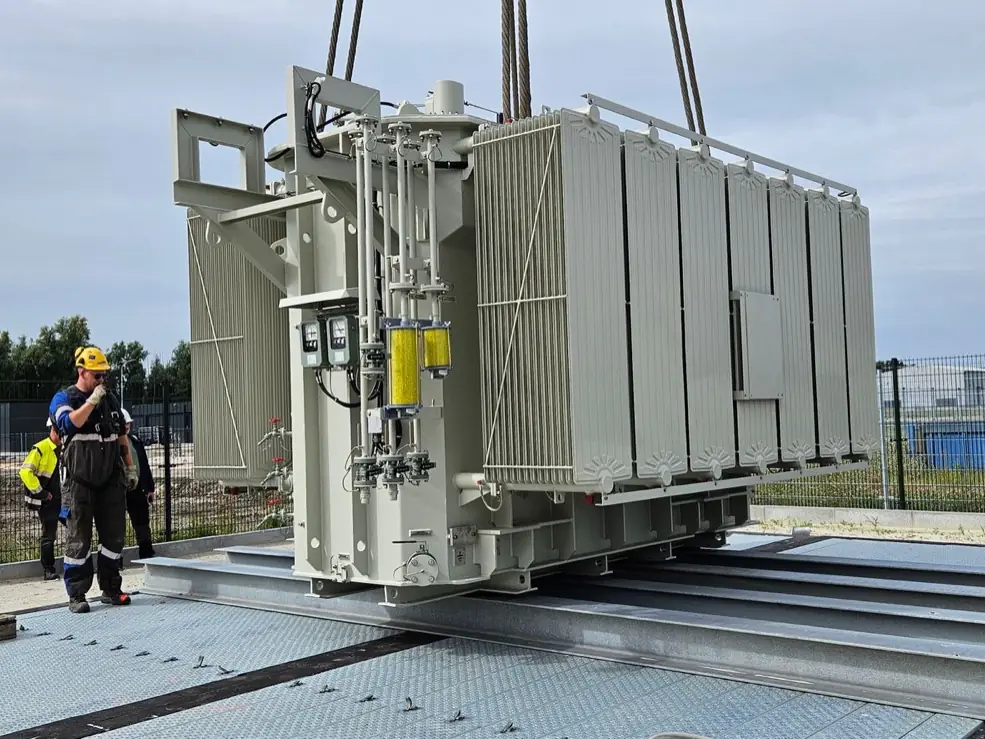
Enexis builds, operates, and maintains the electricity and gas distribution networks across Groningen, Drenthe, Overijssel, Noord-Brabant, and Limburg. Almost everything we do runs on electricity, whether you are a nurse, a machine operator, a prompt engineer, an influencer, or a parent at home with the kids. Take it away and the world stops fast. That is the job Enexis quietly does every day.
Their vision is a carbon-neutral society by 2050, with a safe and reliable energy supply for everyone. They power nearly three million homes and businesses, with roughly 3.0 million electricity connections and about 2.27 million gas connections. The grid also stretches about 200,000 kilometres. Each year they transport around 33 terawatt hours of electricity and about 4,229 million cubic metres of gas. Behind all of it stand roughly 6,000 people.
Their work covers the whole chain: moving energy from producers to homes and businesses, connecting new and existing customers, expanding grid capacity, and keeping the network running so outages stay rare. They talk openly with municipalities, industry, and energy producers, and they lean on data to get the most out of the capacity they have without overloading the grid. That is how growth stays affordable for everyone.
The challenge: an energy grid under pressure
Enexis wants to help its customers move to a sustainable future. That takes smart work in the ground and smart software above it. Meanwhile, demand on the grid keeps climbing, the energy transition keeps raising the bar, and skilled technical people are hard to find. So Enexis has to be sharp about where it puts its people and its money to keep building, maintaining, and expanding the grid, while keeping communication with customers clear and support easy to reach.
In 2014, Enexis chose the Mendix low-code platform to react quickly to what its internal departments, external partners, and customers needed. Since then it has used Mendix to build over 140 applications, streamline day-to-day operations, and grow a scalable, future-proof IT landscape.
Mendix now touches every business unit at Enexis, from resource planning to finance to health, safety, and environment. It has also become the go-to way to retire legacy systems and plug quickly into existing ERP and CRM platforms.
Enexis and The Orange Force: a partnership that grew app by app
Since day one, The Orange Force has put its best people inside Enexis. That means several senior Mendix consultants, a chief architect watching over the whole Mendix landscape as part of the Mendix Center of Excellence, a UX/UI lead building applications around real user needs, and a Mendix Certified Trainer helping Enexis bring new developers up to speed.
Most of the applications our consultants work on either help prevent and fix disruptions in the energy grid, make it easier for Enexis to talk to its customers, or smooth out internal processes so work moves faster. Both ends of that matter. A disruption in the grid leaves people without heat and power, and a clumsy internal process burns time and money.
At Enexis, we hold ourselves to high standards and we know what we’re doing strategically. What sets The Orange Force apart is that they genuinely match that level, whether we need a sharp strategic discussion or simply need something executed with precision. Across UX, technical complexity, and topics like AI and governance, they always know what they’re talking about. That depth makes every conversation valuable and every deliverable something I can trust.
Derryn Zwart, Product Owner LCAP at Enexis
A few of the projects, and what they actually changed.
Project 01
Enexis’ in-house Mendix Center of Excellence
Enexis is proof that a company can build and run its own Mendix Center of Excellence. One of the cornerstones of the partnership has been setting up their Mendix Center of Excellence, known internally as the Low Code Application Platform (LCAP) team. At the heart of it sits our Chief Architect, embedded within Enexis for over nine years. He has shaped the vision, the architecture, and the way the team works, so Enexis can keep building fast and keep the landscape solid while it grows.
The LCAP team exists to take weight off Enexis’ developers. It standardises and centralises almost everything they need to share, from processes and tools to services, covering NIS2 security and compliance and running the Mendix deployment environment on the Enexis private cloud. As a result, developers get to spend their time building.
Today the LCAP team is the model other teams at Enexis follow, and its success helped spark new platform teams for software development. Not many organisations run their own Mendix CoE. Enexis does, and it holds up. That is what years of steady technical leadership buy you.
Project 02
KAI: a faster, clearer customer intake process
As a distribution operator for electricity, gas, and heat, Enexis wins on service quality. The Enexis Intake Portal, which handled incoming customer requests, had earned its retirement.
The portal tracked private-sector customer requests and the tasks Enexis engineers needed to complete for each one. After years of good service it had reached its technical limits, with request volumes climbing and the energy transition reshaping the process around it. So Enexis moved the whole thing onto a new architecture built on Mendix.
The result is KAI, short for Kleinverbruik Aansluitingen Intake. It gives employees a live view of every customer request: what stage it is at, who is handling it, and what still needs doing. Staff can search and filter to find what they need, add notes, upload files, and check progress on a chart, all in one place.
The work moves faster now, which is the part customers actually notice.
Project 03
BMR 2.0: an app the field crews actually want to use
A key part of Enexis’ operations is checking grid stations to confirm that external contractors delivered them as agreed. Mechanics do this by photographing the important parts of each station on their phones.
The first version, BMR 1.0, left a lot to interpretation. Some teams put their photos in SharePoint, others pasted them into Word, and the list of parts that needed a photo was not always clear. BMR 2.0, built in Mendix, finally gave the whole job one home.
It also automates part of the task preparation and planning. A planner selects the grid station, and the system turns that into tasks for the mechanic, including the list of parts that need photographing. Mechanics follow the list, then a data processor checks that everything has been documented, measured, and photographed. So one trip per station is enough now, which saves a lot of time.
Our UX/UI lead shaped this one. He talked to the people who would use the app every day, then turned what he heard into low- and high-fidelity designs and clickable prototypes, and handed the development team a clear foundation to build the right things. Then he built the front end of the responsive Mendix app around those users.
Project 04
Duaal Tijd Schrijven: bridging Mendix and SAP
Enexis had always relied on SAP for employee time registration, and it worked. Then Enexis decided to migrate from SAP R3 to SAP S/4HANA. A migration like that takes years, so for a long stretch the data lives in two places at once, partly in the old system and partly in the new one. Mechanics needed an easy way to tell which hours belonged where.
Registering time correctly meant connecting SAP R3 and SAP S/4HANA and bringing their data together. So Enexis built a new application, Duaal Tijd Schrijven, in Mendix on top of SAP to do exactly that.
Why Mendix for this? Because Mendix is faster and easier to integrate on top of SAP than the alternatives, including options from SAP itself. Mendix is also the only enterprise low-code platform endorsed by SAP. And it is the right place for customisation, such as extra time-registration filters, which keeps the core in SAP clean.
Duaal Tijd Schrijven automatically links each registered time entry to the relevant metadata: project tasks, order numbers, and work breakdown structure (WBS) tasks. When new information is added, the system validates it against the rules for the right system and stores it in the right place, either SAP R3 or SAP S/4HANA. Employees register their hours quickly and get them right. Managers also get a clean overview of their team’s registered hours, which makes approval far quicker. Around 4,000 employees and managers use it today, and it has been a key piece of the puzzle throughout the SAP migration.
Project 05
Growing the team: training new Mendix developers
Enexis trains most of its own Mendix developers. When there is more demand than the internal team can take on, a Mendix Certified Trainer from The Orange Force steps in with official training, guidance, and mentoring, so new developers get up to speed quickly and build the way Enexis wants things built.
Results and impact
After years of building with Mendix, Enexis runs an extensive Mendix landscape of over 140 applications that schedule and carry out the work behind its core business processes. That landscape also connects into a wide set of other systems: SAP ERP, CRM, data platforms like Matillion and Snowflake, and physical IoT sensors.
Our people show up in a few different ways here. For example, some build the applications Enexis and its customers use every day. Meanwhile, our Chief Architect keeps an eye on the bigger picture, making sure security, scale, and performance hold up as the landscape grows. And when Enexis needs help getting new developers up to speed, our team steps in to train them.
Enexis has worked with our team for more than 10 years. When that team became The Orange Force in 2023, Enexis came along, and it’s still adding new projects with us today.
Enexis and Mendix in numbers
| Fact | Number |
|---|---|
| Working with our team | 10+ years, as The Orange Force since 2023 |
| Mendix adopted | 2014 |
| Mendix applications in production | 140+ |
| Duaal Tijd Schrijven users | Around 4,000 employees and managers |
| Chief Architect embedded at Enexis | 9+ years |
| Electricity connections served | Roughly 3.0 million |
| Energy grid length | About 200,000 kilometers |
Build Something Like This With Us
Our team has built more than 140 apps for Enexis. If your app landscape keeps growing too, we’ll tell you straight what the next app would take.